
ioLight counts Riverflies, the pollution canaries
Recent press coverage has focused on water companies releasing sewage into rivers and lakes. How do we measure the impact of these pollution events on river health?
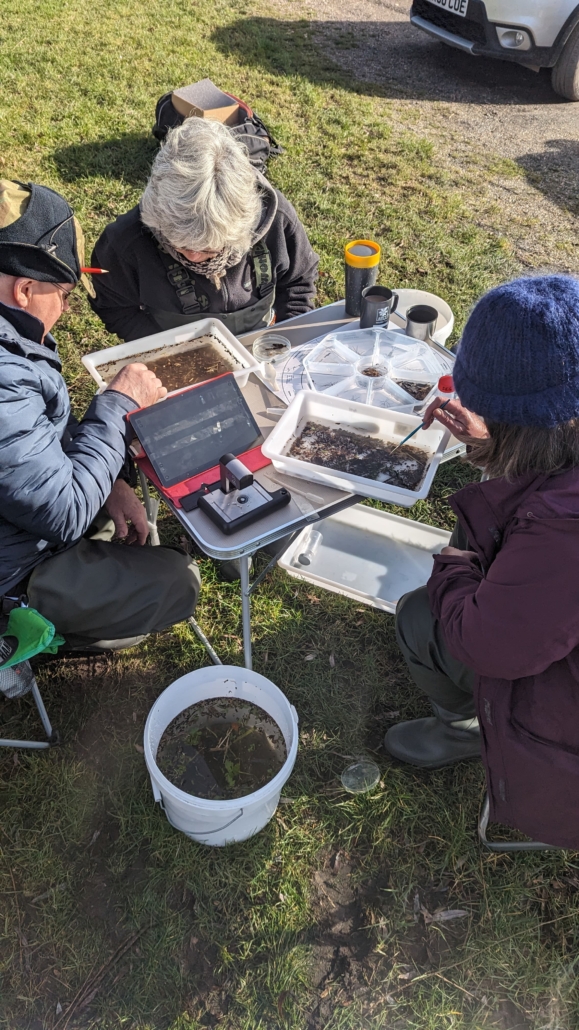
River health depends on three primary factors: water quality, habitat and flow. Riverfly populations reflect the health of our rivers. They are sensitive water quality indicators referred to as the rivers’ ‘canary’. As a food source for other creatures, a drop in the number of riverflies also has a knock-on effect on the entire ecosystem.
The Riverfly Partnership supports projects to assess Britain’s river health. Volunteers are trained to detect and report pollution incidents and create long-term data sets. The Riverfly Monitoring Initiative (RMI) is a simple, standardised monitoring technique that volunteers can use to detect perturbations in river water quality and communicate with the Environment Agency (EA).
ioLight’s Ben Batchelor spent a day with the Arun & Rother Rivers Trust carrying out their monthly Riverfly survey in the upper reaches of the River Ems. Using citizen scientists, RMI looks for three key indicator Taxa which sit at the centre of the freshwater ecosystem. Mayfly, Stonefly and Caddisfly larvae are crucial to freshwater food chains and are sensitive to water quality indicators. With 8 species spread across these three Taxa being qualified for conservation status the government is committed to supporting conservation efforts for these species. A decrease in the baseline, as recorded by Riverfly surveyors, triggers a response by the EA, as these species are protected under the Environmental Liability Directive
ioLight’s high-resolution field microscopes allow volunteers to differentiate between these Taxa and other groups that look similar to the naked eye, such as beetle larvae, quickly on the river bank and record images, ensuring an accurate count. Furthermore, these images can easily be shared as the images taken by the ioLight microscope are wirelessly transferred to a connected phone or tablet. This allows Citizen scientists in the field to call in support of off-site experts for identification.
During ioLight’s time with the Arun & Rother Rivers Trust, fellow survey members said:
‘It would be great to get an ioLight microscope into the hands of all our Riverfly teams to help with identification of key species that are hard to see by eye and get those images out into the community’ Sarah Hughes at the Arun & Rother Rivers Trust said
“This was a really useful and beneficial day, which allowed us to identify species that we cannot see with the naked eye and gather important data to submit to the EA” said Councillor Roy Briscoe, ward member for Westbourne at Chichester District Council.

 (c)ioLight Limited 2020




 ioLight Limited 2024


Great article highlighting the importance of riverflies in monitoring water quality and ecosystem health. It’s inspiring to see how ioLight’s technology aids in accurate species identification, supporting conservation efforts and enhancing citizen science initiatives. Regard Tel U